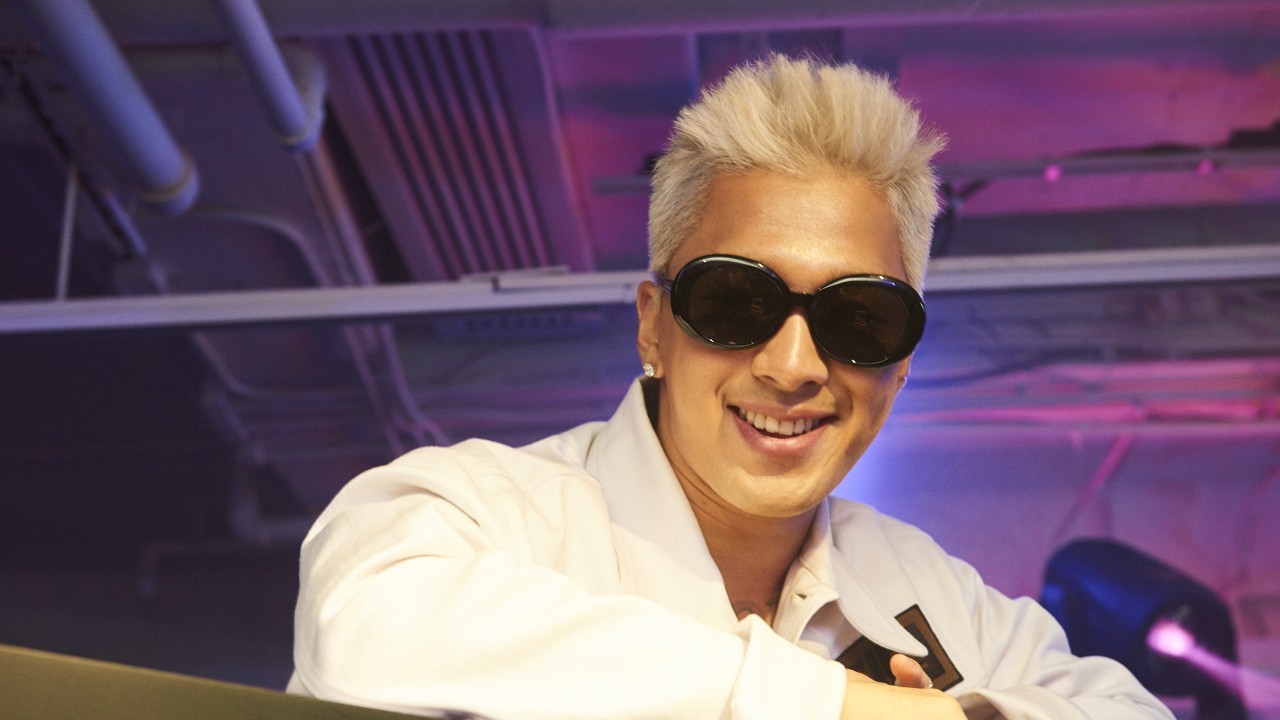
K-pop idol Taeyang celebrates Fendi’s store opening and party

EVENT: Fendi store opening and F is For Party

WHERE: Landmark, Central

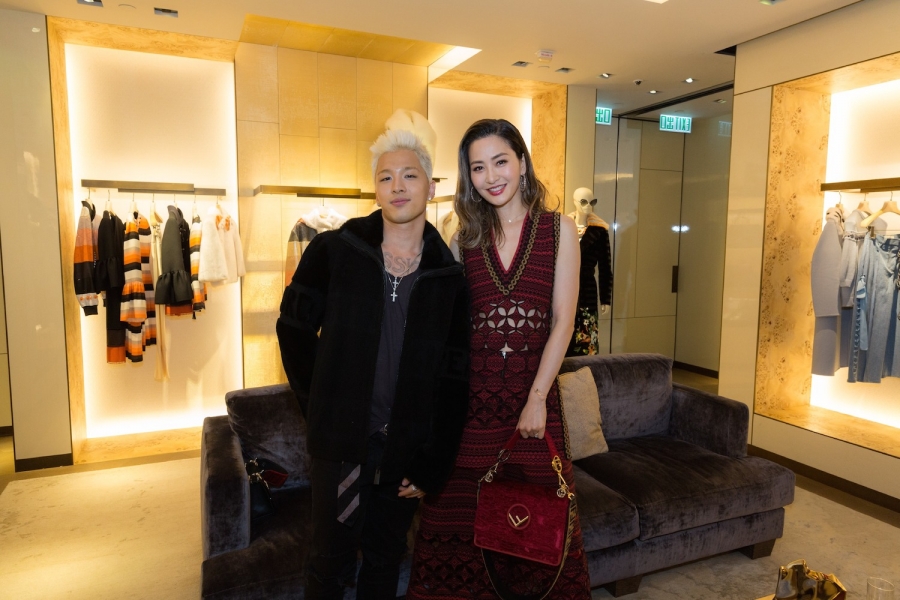
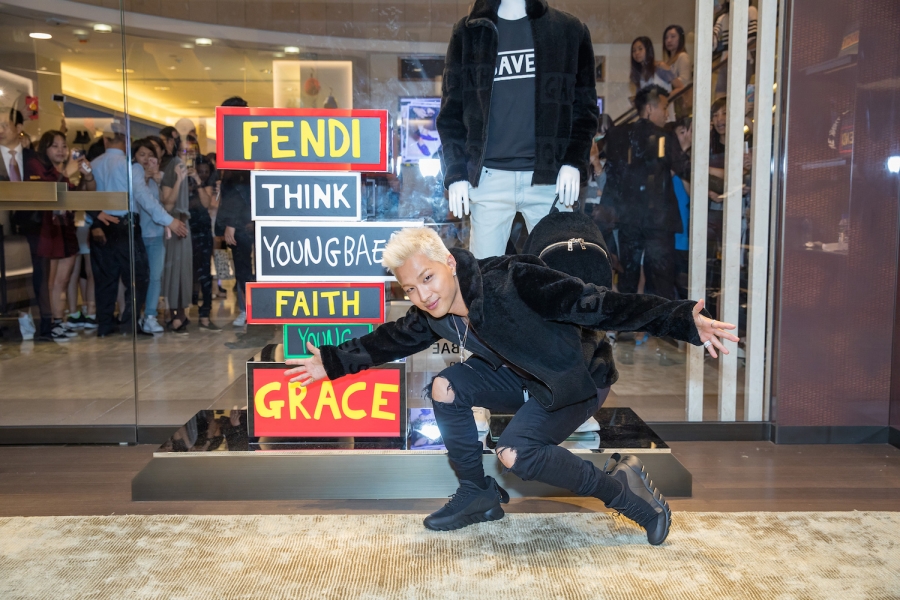
Happenings: Fendi gets the millennials. The luxury fashion brand tapped K-pop idol Taeyang of Bigbang fame for the reopening of its Landmark store. Hundreds of young fans waited outside the store for Taeyang.

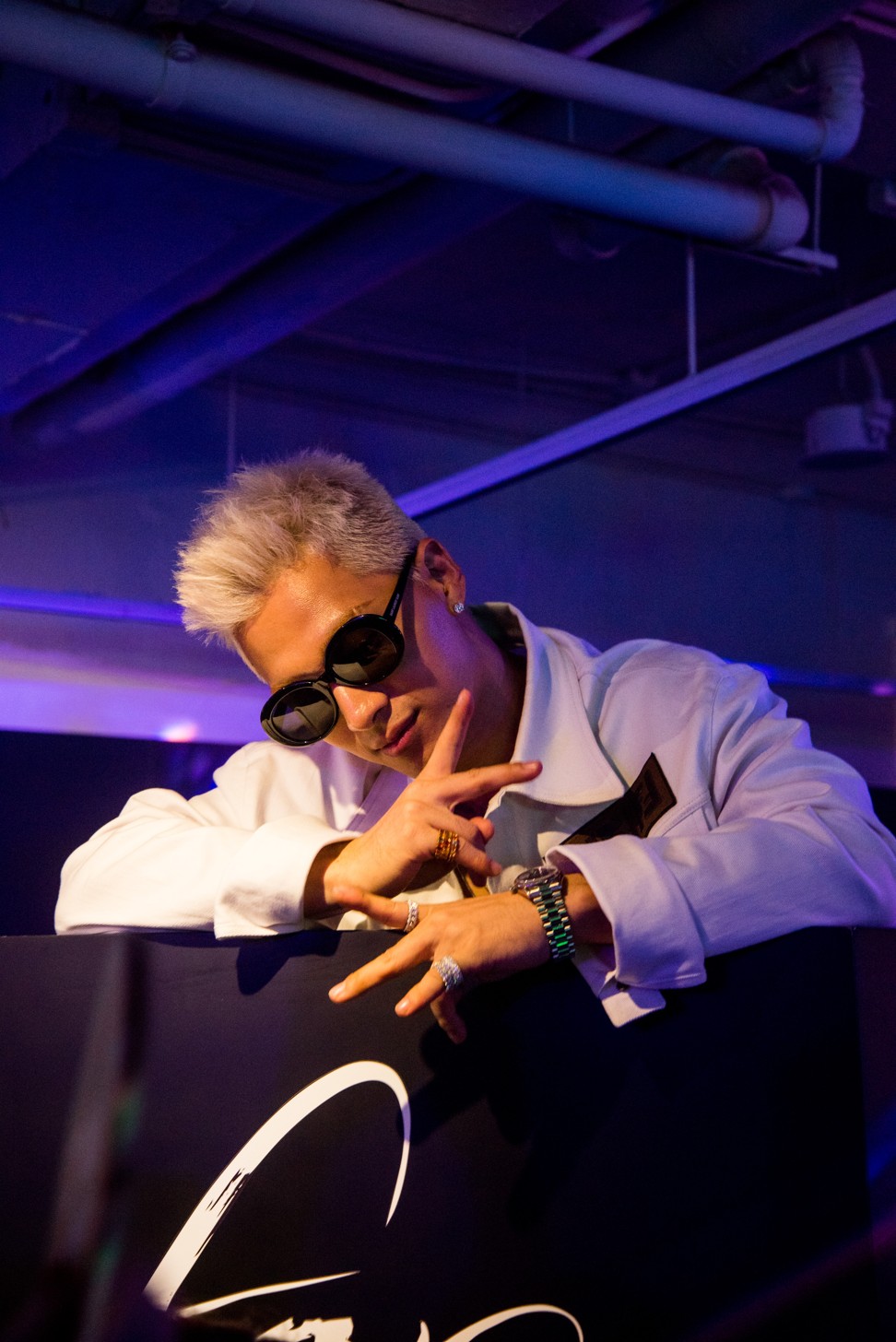
Taeyang at Fendi Party

The star was not only a special guest at the event but he was there to celebrate the launch of a capsule collection he has worked on in collaboration with Fendi designer Silvia Venturini Fendi. The collection boasts sweatshirts, wallets, sneakers and backpacks, many of which are embroidered with slogans such as “Passion” and “Faith”.

Taeyang showed up in the HK$75,000 shearling jacket he co-designed for the store opening, naming it one of his favourites from the collection.

Following his brief stay in the store, Taeyang changed into a dapper white suit to join the “F is For” after party in Sheung Wan. He took to the DJ booth to greet fans at the exclusive party.

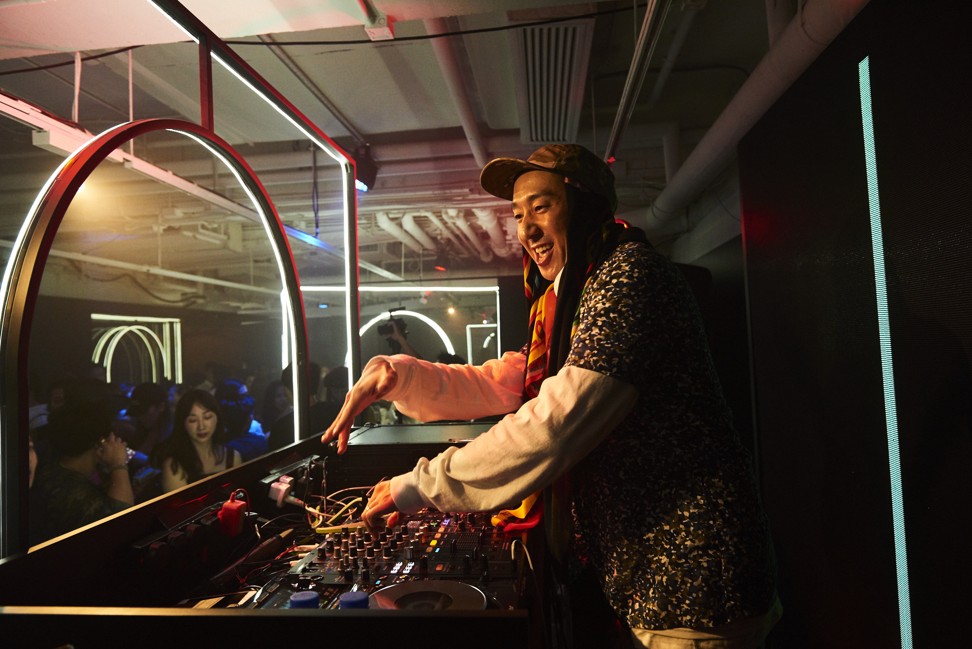
The party, as much of a music event as it is a fashion event, features Asian hip-hop heavyweights the likes of Choice 37 and rapper Okasian as well as DJ Victor Aime from China.

Choice 37 at Fendi Party

Vodka cocktails and canapes all had Fendi logos, while a special cocktail was inspired by Taeyang.

The “F is For” party is Fendi’s initiative to tap the millennial generation customers. The initiative includes a digital platform on Fendi’s official website and a series of off-line events such as the “F is For Party”. Before its Hong Kong leg, the party debuted in New York earlier this year.


Source: SCMP

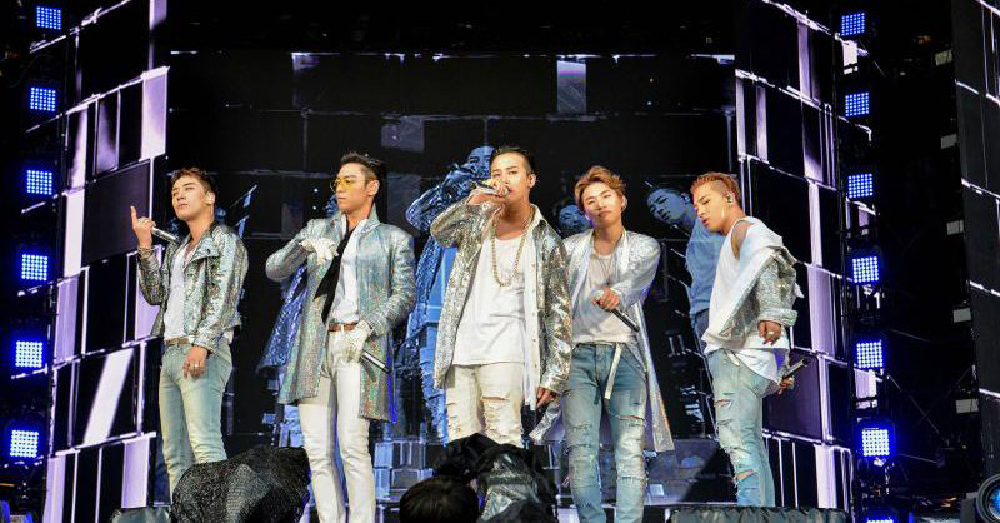
Top 20 kpop artists who drew the largest audience in Japan for the last 5 years (2012~2017): #1 BIGBANG


1. BIGBANG – 3,605,500 audiences
BIGBANG ALIVE GALAXY TOUR 2012 455,000
2013~2014 BIGBANG JAPAN DOME TOUR 757,000
BIGBANG JAPAN DOME TOUR 2014~2015 “X 701,000
BIGBANG MADE World Tour in JAPAN 911,000
BIGBANG10 THE CONCERT : 0.TO.10 781,500
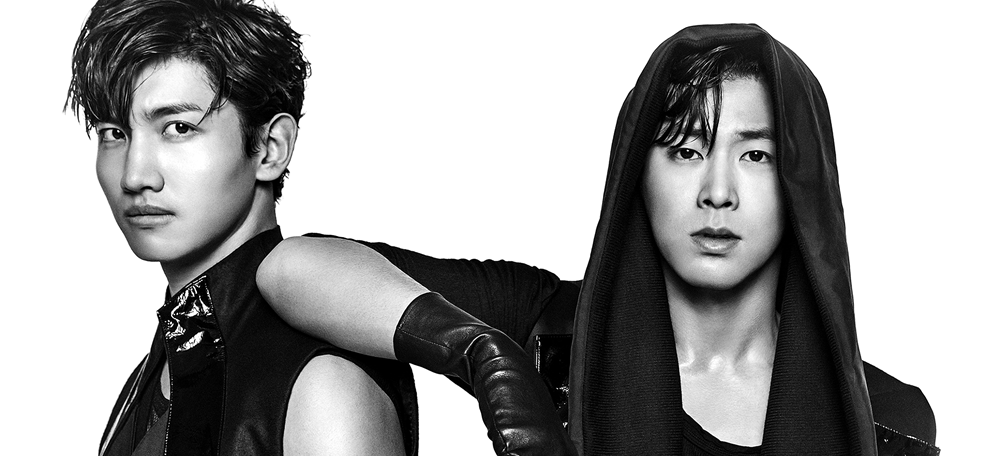
2. TVXQ – 2,795,960 audiences
LIVE TOUR 2012 ~TONE~ 550,000
LIVE TOUR 2013 ~TIME~ 845,000
LIVE TOUR 2014 ~TREE~ 646,960
LIVE TOUR 2015 ~WITH~ 749,000
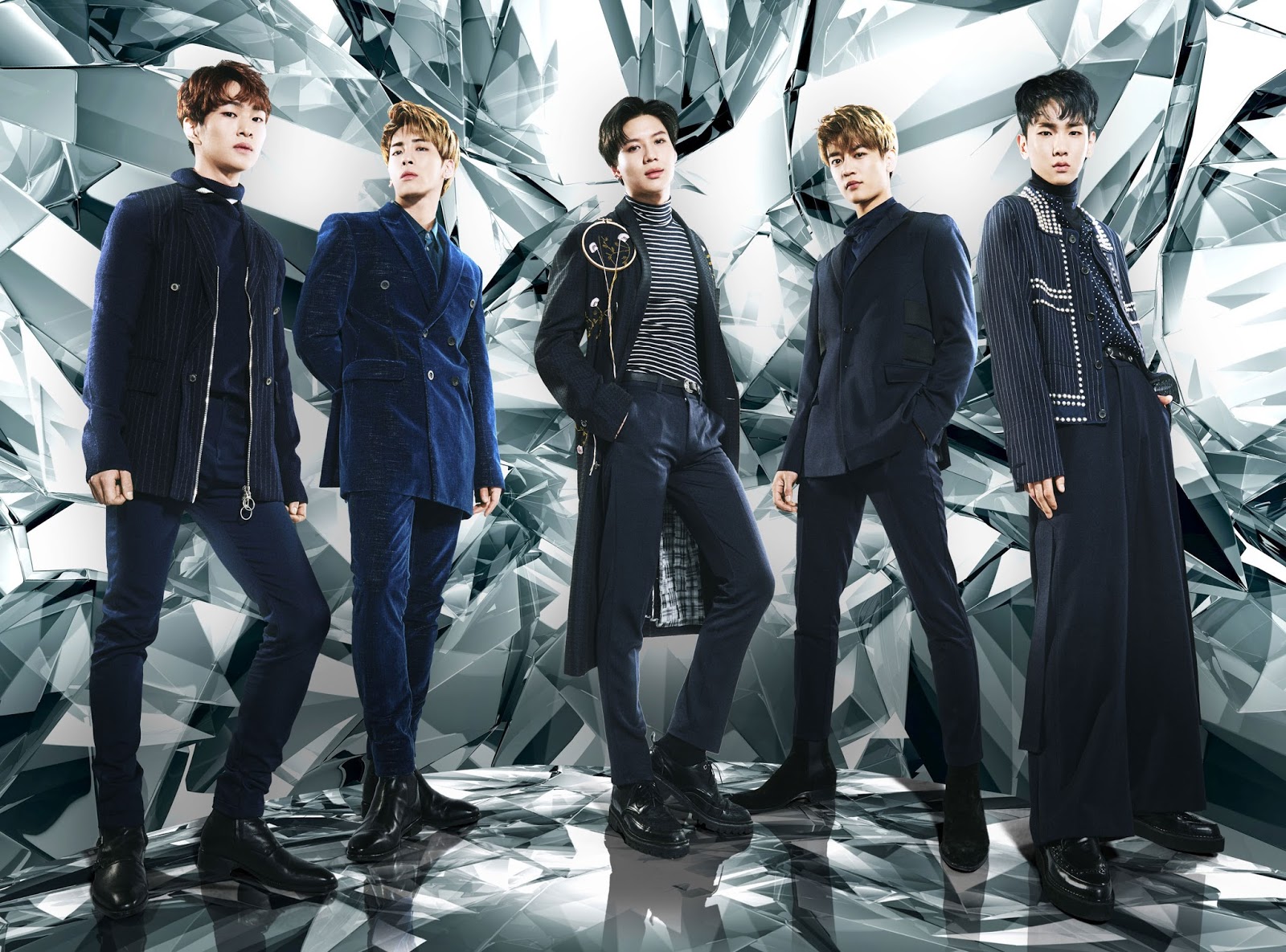
3. SHINee – 1,682,400 audiences
THE FIRST JAPAN ARENA TOUR “SHINee WORLD 2012” 223,000
JAPAN ARENA TOUR “SHINee WORLD 2013” 241,000
SHINee WORLD 2014 ~I’m Your Boy~ 325,400
SHINee WORLD 2016 ~DxDxD~ 378,000
SHINee WORLD 2017 ~FIVE~ 505,000
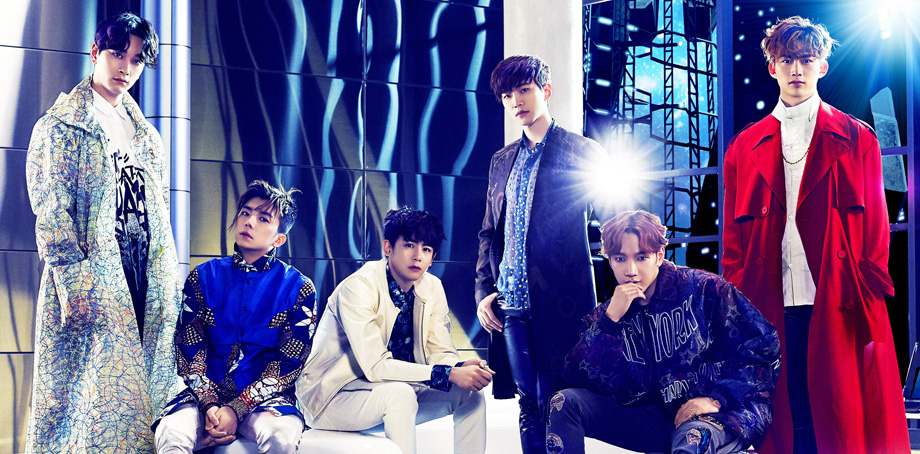
4. 2PM – 942,000 audiences
2013 ARENA TOUR LEGEND of 2PM 250,000
2014 ARENA TOUR GENESIS of 2PM 150,000
2015 ARENA TOUR 2PM of 2PM 150,000
2015 2PM Six Higher days 132,000
2016 ARENA TOUR GALAXY of 2PM 260,000
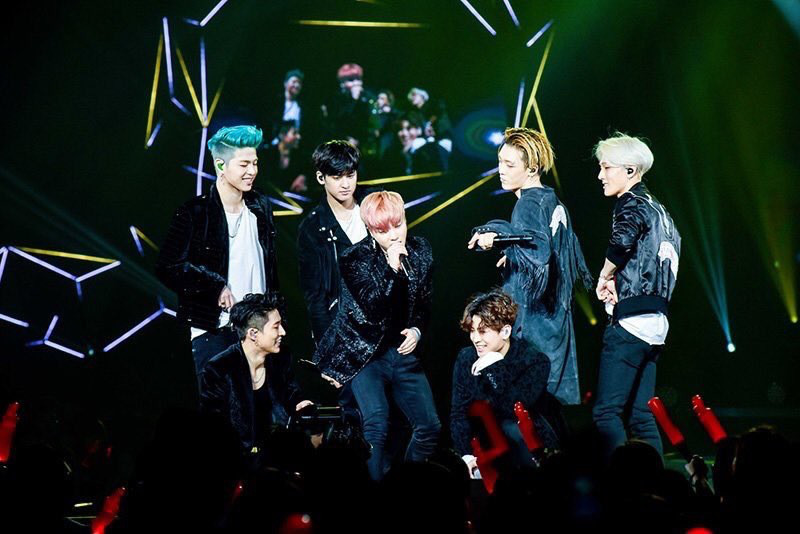
5. iKON – 741,000 audiences
iKONCERT 2016 SHOWTIME TOUR in JAPAN 146,000
iKON JAPAN TOUR 2016~2017 377,000
iKON 2017 JAPAN TOUR 218,000
6. EXO – 734,000 audiences
2014 EXO FROM. EXOPLANET 1 – THE LOST PLANET – 99,000
2015 EXOPLANET 2 – The EXO’luXion – 315,000
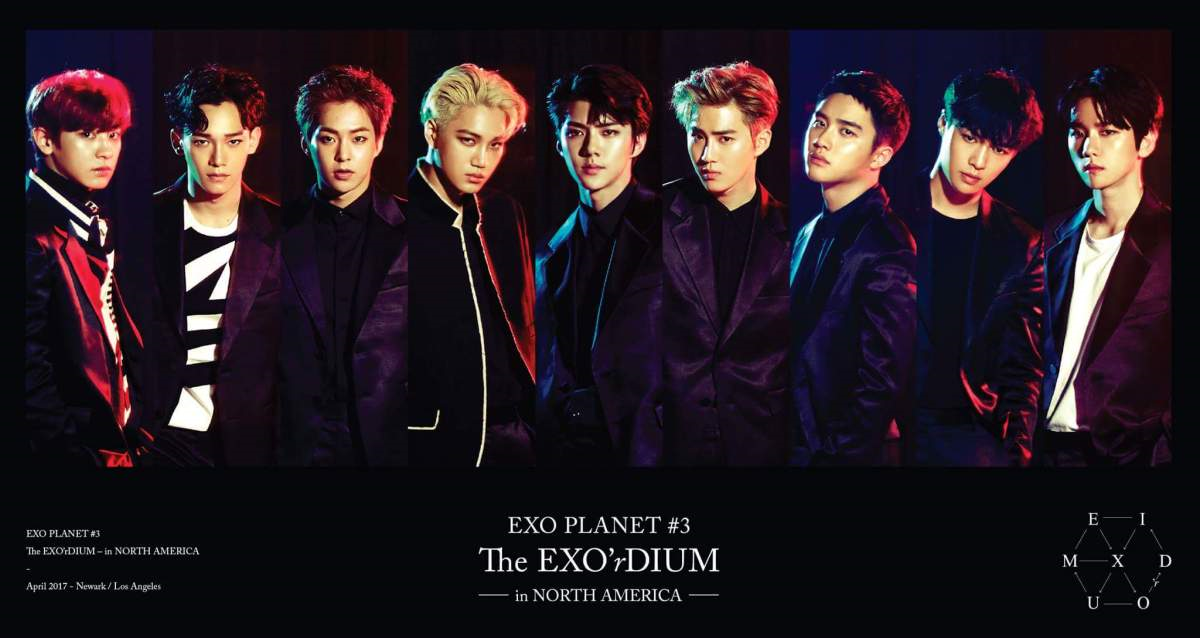
2016 EXOPLANET #3 – The EXO’rDIUM – 320,000
More at: KPopBehind

G-Dragon’s World Tour Marks the End of an Era in K-Pop

Image
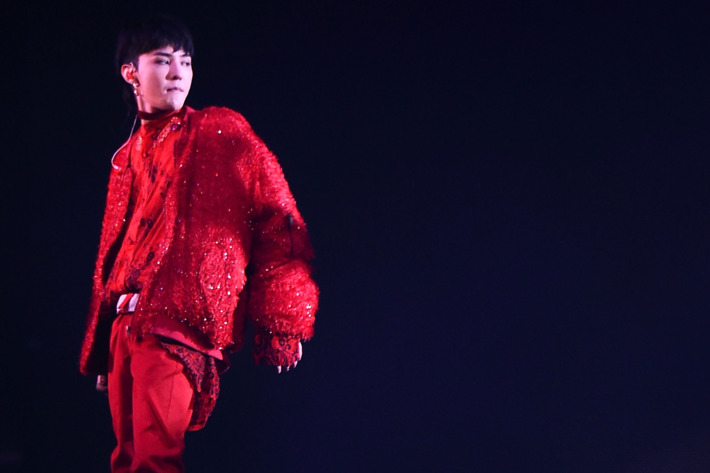
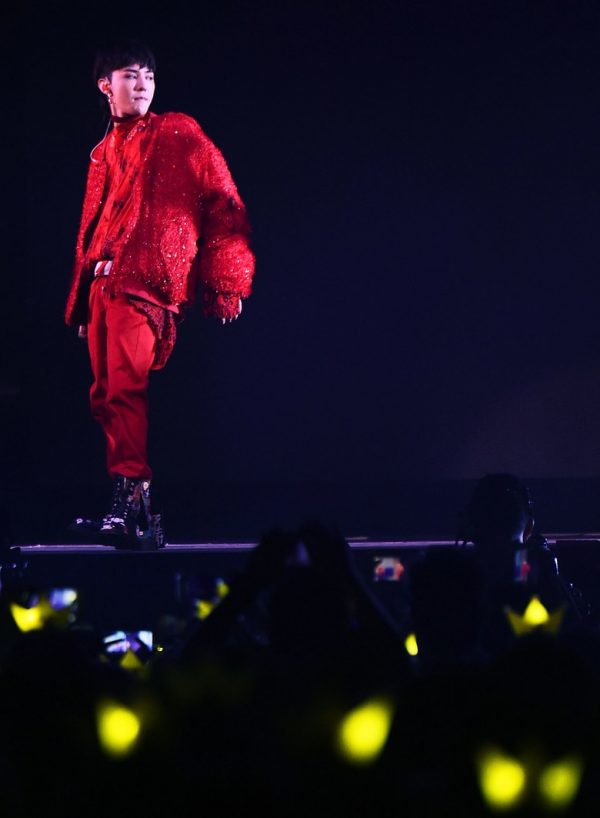
G-Dragon serving a monochromatic red look at the Barclays Center in Brooklyn. Photo: Michael Loccisano/Getty Images

By all accounts, G-Dragon’s performance last Thursday at the Barclays Center was his last one in New York for a while. Once his world tour, Act III: M.O.T.T.E. (which sounds like the Korean word for womb and is also an acronym for Moment of Truth the End), finishes in the fall he’s due for Korean boy-band heaven, a.k.a. mandatory military service, a roughly two-year requirement that not even millions of screaming fans can get you out of. The two-year conscription has effectively killed many music careers (RIP Rain), because the Korean music machine crunches onward without you, and there’s always someone younger, shinier, and better coordinated waiting in the wings. So for almost two hours, G-Dragon rapped, caterwauled, and crooned his way through his past three solo albums, including his latest, Kwon Ji Yong — his given name — to give his New York audience a farewell. It was both an opportunity to say good-bye and a chance to stake out his legacy beyond the one that made him famous: his debut with the boy band BIGBANG back in 2006.

Pop music crystallizes time and place, so when I think about G-Dragon, I remember the first time I moved to Seoul in the summer of 2008. BIGBANG had just released “Haru Haru” (“Day by Day”), the undisputed song of summer — and as I can now attest, decade. The song was everywhere, from speakers outside of beauty shops on the street to variety shows on TV, to late-night karaoke sessions where it was a requirement that I, at the very least, sing the chorus. I was new, but I was no fool. The lyrics, written by G-Dragon, about the pain of letting someone you love go aren’t exactly groundbreaking stuff, it was more the sound — a mix of dance and rap and ballad that leveraged the strengths of all five members and became one of their signatures. What was once innovative has since been copied and standardized to the point where almost every boy band now has a charismatic rapper with a booming voice.

The music video had a plot fit for Korean dramatic sensibilities: The protagonist (played by G-Dragon) believes his girlfriend is cheating on him with his friend (played by fellow rapper T.O.P.). Of course, the twist is that they were only pretending to cheat because she was dying and wanted to spare her love the pain of watching her die. (Just go with it.) G-Dragon learns of this too late and arrives at the hospital to an already-gone girl. It was stupid and dramatic and I loved it.

More importantly, “Haru Haru” launched BIGBANG into the canon of Korean pop music and proved that they were more than one-hit wonders. When they debuted in 2006, BIGBANG struggled to find their groove, coming up with a No. 1 hit a whole year later — eons in K-pop time — with the song “Lies.” (This also has a dramatic — and arguably superior — music video). But “Haru Haru” tapped into the Zeitgeist, blending a deep affinity for torch songs with the swagger of hip-hop, and set a wildfire to the K-pop fandom. The song is now regarded as one of the most influential to come out of Korean pop music, but maybe more saliently, it gave BIGBANG — and its ringleader G-Dragon — a wider berth to become stranger, more exploratory, and idiosyncratic.

By the time GD&TOP, a collaboration between G-Dragon and T.O.P., came out on Christmas Eve of 2010, G-Dragon had fully come into his own. The album skips around genres effortlessly: Synth club bangers like “High High” and “Oh Yeah” sit next to an effortlessly cool, Diplo-produced track called “Knockout,” and a bright and cheeky pop song “Don’t Go Home” — the latter two were censored by Korean broadcasters for lewd content.

More and more, G-Dragon was embracing the aesthetic mélange that’s inherent to K-pop’s DNA. Rather than get buffeted by South Korea’s rapidly shifting fashion winds, he was a master and commander who existed in a near future where every color was psychedelic and gender didn’t matter. Trends? G-Dragon blended them up and ate them for breakfast. His hair has been every shade of highlighter, he was into giant fur aviator hats for a while, and in an especially iconic moment, he appeared on the cover of Vogue Korea with long blond hair, looking like an androgynous model.

The best example of his chameleonic power is “Crayon,” from his 2012 album, One of a Kind. It demonstrated his ability to metabolize pop culture and fashion on a global scale and reform it into his own aesthetic. The single and the accompanying music video are full of jokes, from the “Giyongchy” beanie as a nod to Korea’s burgeoning fast-fashion industry, to the Joker in The Dark Knight, to the song title itself, where he asks you to “get your cray on.” He uses the full palette of the rainbow, too, opening with a popping pink Wonder Woman robe before moving to jackets in holographic gold and Thom Browne’s 2012 fall collection with its fun-house proportions. He also appears in drag, because why are we taking any of this so seriously?

I loved how weird G-Dragon was. I liked that he didn’t feel that he had to bend to popular pressure to get swole the way other boy bands — like 2PM2AM, and DBSK (Dong Bang Shin Ki) — did. Even now, he’s as skinny as ever, and despite his relative size, his aesthetics are defined by excess. He is too much, all the time. There are too many references and ideas, colors and shapes — yet on him, they feel just right. Where there’s a constricted idea of masculinity in society, G-Dragon exploded the paradigm for how a man could be. He was like Prince, only less interested in making his body a sexual object. In G-Dragon’s world, fashion could be a fun, playful, and joyful, rather than exacting and serious. Clothes could be an expression of your core identity, or they could just be something you’re trying out — a mood, a whim, or an idea. He was postmodern in the best sense of the word. He proved that you could, in some way, be anything and everything, and for someone coming to Korea from America by way of Florida, this was an absolutely breathtaking way to exist.

I don’t mean to talk about him in the past tense. G-Dragon is still alive and kicking; he’s just going to the military. And yet, even onstage at Barclays, he knew that this was the end of an era. Toward the end of the show, he played a meandering five-minute video monologue. It was a confessional filmed as though he was in between wardrobe changes; he was wearing a shiny, red bathrobe that he fidgeted with as he explained, haltingly, that he wasn’t sure exactly who he was, but that he wanted to be known as himself, rather than simply his onstage persona. “I am always trying to look good when I dress up as GD, like this,” he said. “But the reality is sometimes it feels too heavy on me. Still, I feel like I’ll be embarrassed if I take it off.”

This, too, was a performance. But there was something touching about the artifice, the self-constructed gestures and affected American accent that made it feel like something true — an attempt to remind people that G-Dragon was more than the sum of the past decade. What he was saying was that he wants to avoid the fate of other former boy-band idols whose careers faded away after their two-year military hiatus, and establish himself as an artist for a lifetime. At the end of his 22-song set list, he sang “Untitled, 2014” — a simple, pared-down track about wanting to get someone back because a love like that just doesn’t come around twice. A red baseball cap shaded his eyes when he told the audience, in English, “You guys really get me.” I really felt like I did.

Source: Vulture

Inside the F… is for Fendi Party (feat. Taeyang)

A crowd gathered outside Fendi’s Landmark Men boutique in the hope of getting a glimpse of Korean pop star Dong Young-bae, better known as Taeyang. The lead singer of the popular boy band BIGBANG was in town to unveil his Fendi for Young Bae capsule collection. The first of its kind for Fendi, the collaboration between Taeyang, Silvia Venturini Fendi and the label’s Men’s Studio team includes outerwear, accessories and small leather goods embodying the spirit of Taeyang’s personal style, and complements Fendi’s fall/winter 2017 collection. The launch coincided with the reopening of Fendi’s refurbished Landmark Men boutique, and Fendi hosted an exclusive cocktail party to celebrate the occasion. After the cocktails, guests made their way to Costco Tower for an after-party that saw dancing continue well into the early hours.

Covered by: Christian Barlow

Source: Fendi

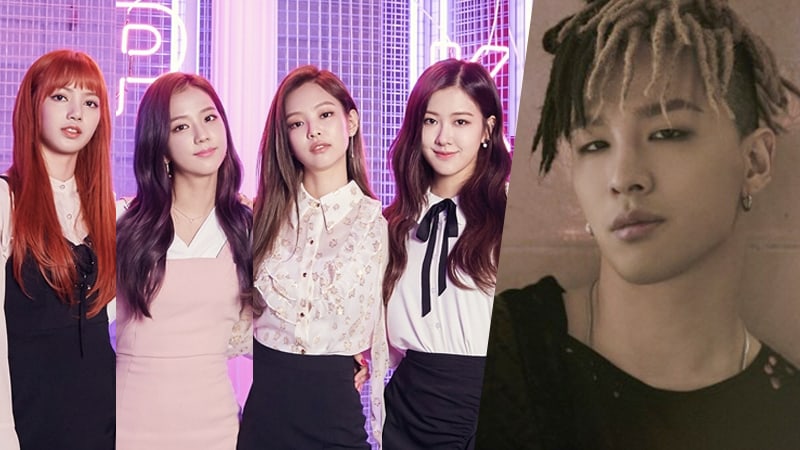
BLACKPINK To Open Taeyang’s Concerts In Japan

BLACKPINK will be backing up Taeyang at his world tour concert in Japan!

From August 5 to 6, BLACKPINK will be opening Taeyang’s concerts held at Hotto Motto Field Kobe in Japan.

This is the second time BLACKPINK is going on stage for a concert in Japan after their solo debut concert held in Nippon Budokan. The feat is especially impressive since BLANKPINK is the first foreign girl group to perform in Nippon Budokan and at a stadium consecutively.

After selling out their debut concert, BLACKPINK has confirmed appearances in several of Japan’s prominent events and will be releasing their Japanese debut album on August 30.

Meanwhile, Taeyang is gearing up for a solo comeback along with his world tour concert “2017 World Tour WHITE NIGHT.” The singer has currently confirmed shows in Japan, Korea, Canada, and the United States.

Source (1)(2)


Source: Soompi


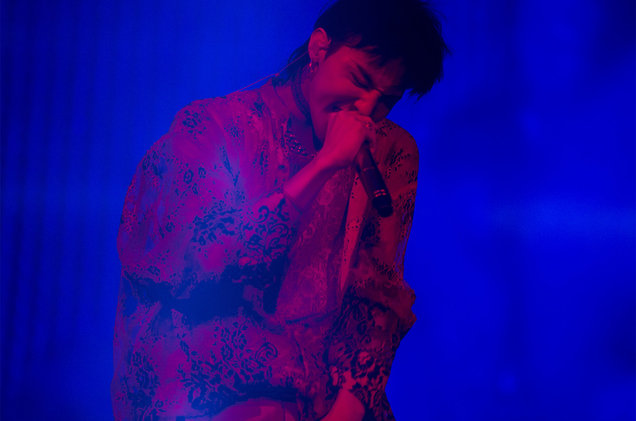
G-Dragon Explores His Identity at Brooklyn Stop of Act III, M.O.T.T.E Tour


YG Entertainment
G-Dragon onstage at Barclay’s Center on July 27, 2017.

After baring his soul on his eponymous EPKwon Ji Yong a few weeks before, the K-pop icon known as G-Dragon closed out the U.S leg of his 2017 Act III, M.O.T.T.Eworld tour with a stop at the Barclays Center in Brooklyn on Thursday night.

The BIGBANG frontman drew in a dedicated crowd to the New York City venue, with loyal fans, known collectively as V.I.Ps, setting the center aglow in the yellow light of crown-shaped lightsticks. The golden aura of the crowd blended with the predominantly red and black hues of the production, bathing G-Dragon in light as he attempted to reconcile his humanity and the charismatic persona that’s made him an icon of the Korean music industry.

The tension of the night was tangible as the artist struggled to reclaim his identity as Kwon Jiyong. The concert dramatically trisected his career into three parts: G-Dragon, G-Dragon vs. Kwon Jiyong, and Kwon Jiyong. There was a steady flow through the timeline of GD’s releases, beginning with songs from his Heartbreakeralbum and GD & TOP Vol. 1, a collab with another BIGBANG member, in the first part, tracks from One of a Kind and Coup d’Etat in the second, and the third portion of the night dedicated primarily to his latest EP.

The journey through the past was straightforward, with G-Dragon running through just about his entire solo discography in the two-hour concert, intertwining B-sides and singles seamlessly. As a performer, G-Dragon thrived during his less well-known tracks, with a haunting rendition of “Obsession” drawing on graveyard imagery and religious iconography, and “R.O.D,” a Coup d’Etat-era reggae-electro track fan favorite that incorporated CL as a featured artist via pre-recorded video. Meanwhile, his hit tracks, like “Crayon,” “One of a Kind” and “Who You?” had the whole audience singing along as the rapper, backed by a live band and a team of dancers, dominated the stage with his swaggering delivery.

The night’s theme of separating Kwon from his identity as G-Dragon came to the forefront toward the final third of M.O.T.T.E — which stands for “Moment of Truth; The End” — with a five-minute video of the singer expressing his concern over living his life as a caricature of himself. “I’ve been living as G-Dragon until now, but now I want to live being Kwon Jiyong,” he said. “I don’t know what you want me to be, but what you see right now is everything.”

The Kwon Jiyong portion of the night drew on his new EP, within which GD put himself forward not as a K-pop superstar, but as Kwon, the human being. But the segment was filled with clashes of identity: He cried for affection (“I need somebody, any goddamn body”) in “Superstar,” but was raised above the stage, sitting on a figurative throne far above the crowd. He wanted to remove the glitz, but appeared onstage wearing not one, but two bedazzled red jackets. Even after he removed the sparkly overcoats and came down to more earthly levels during the finale and interacted with fans in the pit, it wasn’t quite clear where the line was between G-Dragon and Kwon; the star’s shining aura couldn’t be diminished as he delivered a riotous, pyrotechnic-filled performances of “Middle Fingers-Up” and “B******t.”

When he returned to the stage for his encore decked out in a white robe that appeared to be covered in blood, it was G-Dragon’s flamboyancy on display, underlining the impossibility of separating his duality. The discord of G-Dragon’s final songs — “Crooked,” a rollicking pop track propelled by the live band, and “Untitled, 2014,” a mellow, vulnerable song backed by a single piano — similarly emphasized this. But as he commanded the stage for one last time, absorbing the cheers and applause of the crowd, it became very clear: As a musician who has been in the limelight for the majority of his life, separating the two parts of who he is wasn’t the intent of Act III. Rather, it was a public reveal for his fans, showing the humanity behind the extraordinary persona he’s built up.

“I was worried that you might not get me,” Kwon said, addressing the crowd during one of his final talking breaks of the night as the crowd roared with support for the soloist. “Since I started this tour, I felt you guys get me.”

Act III: M.O.T.T.E was introspection in a public venue and, surrounded by the fans that love him, G-Dragon used the night in an attempt to figure out what it means to be both a man and one of South Korea’s most celebrated stars.

Source: Billboard

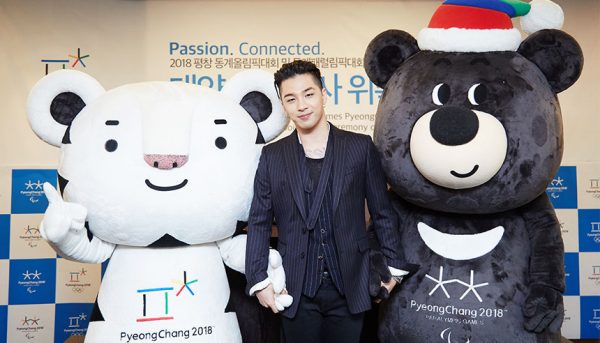
Taeyang’s Interview for PyeongChang 2018

Sing a Song for PyeongChang 2018
The soprano JO Su-mi, whom the conductor Herbert von Karajan called “voice from above,” and K-pop artist Taeyang, who has many fans both in Korea and abroad, and is popular for his groovy dancing and singing, have become the latest honourable ambassadors for PyeongChang 2018. Although they are representative figures in different arenas of music—one in classic while the other in pop—they both said that sports and music are universal languages.

Snow, Music, and Sun (Taeyang)
Taeyang, a popular K-pop artist, was born in 1988, the year when the Olympic Games was held in Seoul. Babies born in that year are often called “Olympic kids,” and he is one of them. To be an honourable ambassador for PyeongChang 2018, which is 30 years from the Seoul Olympic Games, is special for him.

Congratulations on your being named as an honourable ambassador for PyeongChang 2018. You looked incredibly happy when you received the nameplate.
TAEYANG: This is the first nameplate I have ever had with my own name. I am so thrilled (laughs). From now on, I am going to give one to anyone I come across and call for their interest in PyeongChang 2018.

You were born in 1988 when the Olympic Games was held in Seoul, weren’t you? What does being an honourable ambassador mean to you?
TAEYANG: I am so excited to be a part of something that makes my heart go wild. I know how hard athletes have to train and fight to beat themselves. In addition, the Olympic Games is at the pinnacle of their career. I am truly honoured to be there with them, most especially because PyeongChang 2018 aims to become a cultural event. A song to promote the Olympic Games will be released on November. Have high hopes for the new song!

Do you have a favourite winter sport or athlete that you cheer for?
TAEYANG: I love watching short track speed skating and figure staking. The most recent figure staking event I watched was that in which Cha Jun-hwan played. I was impressed with how he kept his calm throughout the game despite his young age. I wish the aspiring young figure skater flourishes at PyeongChang 2018. I learned about curling from a TV show and found it interesting as the players in a team moved as one. I hope I could grab an opportunity to learn the game. Curling is also one of the Paralympic events, so I hope that more people would be interested in it.

Performing artists and athletes have something in common in that they work hard for a long time to stand on a stage
TAEYANG: Yes. I believe music and sports can go beyond borders. When I perform for foreign fans, they often sing with me in Korean lyrics. It is such a wonderful feeling. I feel as if I am doing something very important. I think playing sports is not very different. When I watch the athletes play as hard as they can, I come to think of me immersed in singing in front of the audience, regardless of how many they are or how well they respond to me. I will always think of myself as one the athletes whenever I stand before an international audience.

Source: PyeongChang 2018

Vogue: G-Dragon, the Undisputed King of K-Pop, Takes New York

As you might suspect, Asia’s biggest megastar arrived with a bang in Brooklyn. The 28-year-old G-Dragon, formerly of K-pop boy band BIGBANG, played Barclays Center amid his four-continent world tour, Act III, M.O.T.T.E., or Moment of Truth the End, a three-part performance chronicling the oeuvre of his solo career (which began in 2009) and the perpetual tension between his larger-than-life persona (G-Dragon) and his more introverted, actual self (Kwon Ji Yong).

For the South Korean performer, who many have compared to Michael Jackson in terms of both talent and career arc, commanding the stage comes naturally. G-Dragon has been training for this moment for essentially his entire young life: working tirelessly among the lower rungs of the then-nascent Korean pop and entertainment industry in the 1990s and signing onto mainstream label YG Entertainment (LVMH is a current investor) in the early aughts. With BIGBANG, G-Dragon and his bandmates—T.O.P., Taeyang, Seungri, and Daesung—went on to sell more than 140 million records, propelling themselves into superstar status both at home and throughout the rest of Asia and breaking records in Japan, Taiwan, and mainland China. The rest of the world soon took note. “I wasn’t trying to be famous when I started making music. I mean, that wasn’t the first thing I wanted,” G-Dragon told I-D in June. “But, of course, I see more and more people getting interested in Korean culture, and I’m so proud about it. I’m honored in a way. I love my country, so I’m more than happy to see it shine. It’s going really fast; there’s a good and a bad side to it, but I try to take the best of it. I still want to try new things so I can learn about them and then teach those things to younger people.”

The rising tide of popularity of Korean pop music—consider the current prominence of Billboard-award winning bands like BTS—is also characteristic of a broader, cultural sweep known as hallyu, or the “Korean Wave,” a transnational flow of state-sponsored soft power in which music, television, fashion, beauty, aesthetics, and cuisine are all exported for ready consumption, giving birth to an enduring era of irrefutable Korean cultural currency. The effect of hallyu has not gone unnoticed: China’s government recently imposed a ban on K-pop stars, television dramas, and beauty products from entering mainland China as a retaliatory effort against the bilateral, U.S.–South Korean installation of the THAAD missile defense system.

With the rise of the Korean Wave also came G-Dragon’s own staggering celebrity. A consummate breakout artist, he is known for his outré, gender-fluid fashionsand slick, signature swag. His wide range of performance styles—rapping a lyrical verse one minute, singing falsetto sotto voce the next—perfectly captures the allure of K-pop’s unique synthesis: It’s part pop, hip-hop, and EDM, with the occasional interspersing of English words. Where K-pop really nails it, though, is with music videos, in which outsize outfits and non-narrative worlds of fantasy, fun, and intrigue converge—these are the blueprints that viral successes (think: Psy’s “Gangnam Style”) are made of.

As the undisputed K-pop king, G-Dragon has not only transcended this label, but also his genre, and he does so by pushing boundaries and retaining a tightly drawn veil of mystique. It’s no wonder he has also captured the admiration of fashion’s elite, like designers Karl Lagerfeld, Hedi Slimane, and Jeremy Scott (he even began his own fashion line, PeaceMinusOne), and collaborated with such artists as Missy Elliott, Justin Bieber, Diplo, Baauer, Skrillex, and M.I.A. “I am going through an important phase in my life,” the musician recently told Hello Asia!.“Instead of focusing on showing a trendy new look and sound, I’ve worked on this album as if it’s my last.”

A by-product of the wildly inventive K-pop process is that the music and the performance are always an amalgam of sorts. Because the content of his work isn’t rooted to a particular sense of place, culture, or time, G-Dragon is able to move around in new spaces and openings, sliding through the full-scale range of creative ingenuity and identity. Often deemed androgynous or gender-bending in a society that maintains traditional, patriarchal values and a noted adherence to manufactured beauty ideals (and plastic surgery), G-Dragon has no qualms sitting atop a white throne in an effete burgundy velvet smoking tuxedo with a matching choker and drop earrings, or crooning a ballad one minute and spitting rhymes among a scantily clad, all-female ensemble the next. “We are still hungry,” G-Dragon told I-D. “Korean people, including me, want to go faster and faster. In music, in fashion, in art, too. One shot, one kill: That’s my mentality.”

His chameleon-like style and irrepressible persona continue to set hearts aflutter—his is an aura and aesthetic where, for some, it’s not merely enough to just aspire to date him, but to be him, as is the case of China’s latest K-pop inspired “boy band” Acrush, comprised of five handsome girls borrowing from his legacy and tableau. But G-Dragon, soon approaching mandatory inscription into South Korea’s military service, seems to have far evolved from the persona he helped to create, opting instead for the more introspective and grown-up man Kwon Ji Yong has become. This concert is “more like a present for myself,” the star told Hello Asia!, citing a desire to achieve “something meaningful” that he can recall fondly, a person who has made a real impact, and “I don’t want that person to be G-Dragon.”

“Who am I?” G-Dragon asks the audience in a pretaped monologue during his second act at Barclays, a shiny sequined red kimono glistening as the camera playfully conceals his face—the audience, in suspense, hopes for the slightest reveal. The image cuts out as text appears. “Do you know who you are?”

Source: Vogue

G-DRAGON Shows Dreamlike Eyes for the Cover of a Japanese Fashion Magazine

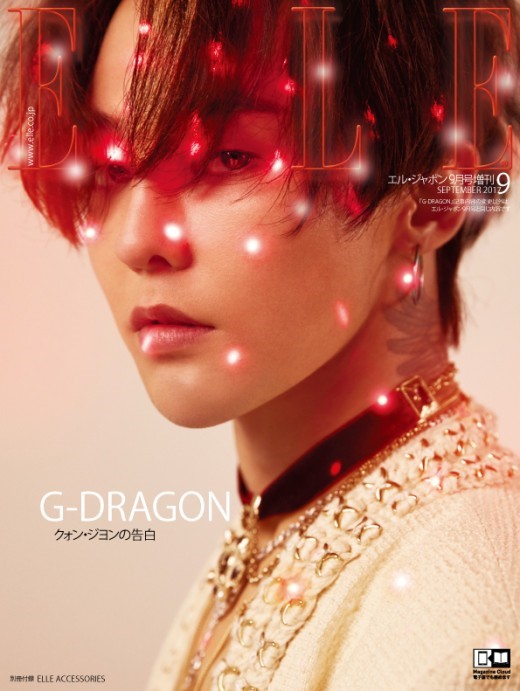
[TV리포트=이지호 객원기자] BIGBANG’s G-DRAGON shows off his mysterious charm on the cover of a Japanese fashion magazine.

The cover of Elle Japan’s special September edition, which was published on July 28, features G-DRAGON with red hair and looking at the camera with sad dreamlike eyes.

“KWON JI YONG’s Confession” is written at the bottom of the cover. An article in the magazine tells the story of G-DRAGON and how he recently found a new side to himself that he didn’t know about until now.

The September edition of Elle Japan has been selling like hotcakes even from the first day it was published. People had a hard time getting the magazine and they posted tweets like “I went around a couple of book stores, but I still couldn’t get one” and “I went to a small book store in my neighborhood but they didn’t have it. So, I had to go to a big book store”.

2017. 7. 31.

Source: YG Life

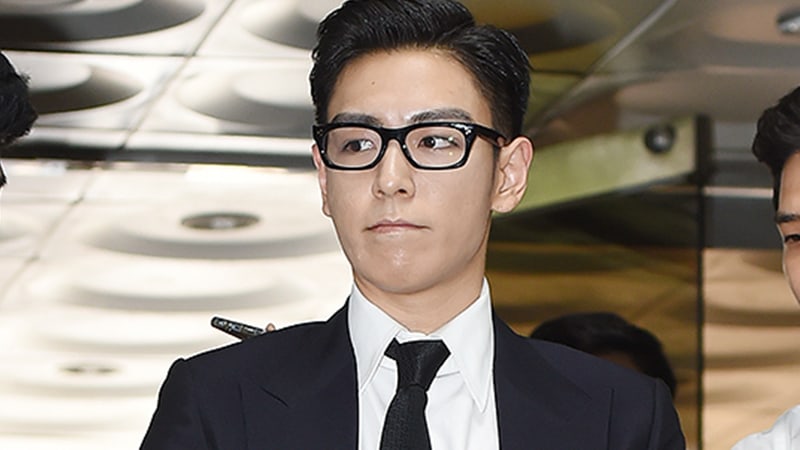
BIGBANG’s T.O.P Loses Position As Conscripted Policeman

BIGBANG’s T.O.P has lost his position as a conscripted policeman.

Korean news reported on July 31 that the Seoul Metropolitan Police Agency recently held a committee meeting to determine if T.O.P was fit to return to service as a conscripted policeman. In the end, the final decision was that T.O.P is unfit to resume service in his previous position; according to reports, the police department will put in a request to the Army headquarters for a new position for T.O.P.

If the request is accepted, T.O.P will either have to serve as a public service worker or a full-time reserve soldier to complete his mandatory service.

Earlier this month, T.O.P’s final trial was held for his marijuana case, through which he was found guilty and sentenced to two years probation, with the possibility of serving 10 months in prison in the event that he violates the set terms of probation.

Source (1) (2)

Top photo credit: Xportsnews


Source: Soompi